
Another Deal from Hell
As someone who’s been down this road before, I can see the writing on the wall.
Jeff Bezos's vision for the future of the Washington Post reminds me of a mistake the late Sam Zell made when he engineered his acquisition of the Tribune Company nearly twenty years ago. Zell, a feisty and mercurial real estate billionaire, didn’t understand a fundamental truth about the business he had acquired. Neither does Bezos, judging from a piece written about the Post in the Sunday edition of The New York Times.
I first met Zell in 2006 when I was managing editor of the Chicago Tribune, just before he stepped forward to acquire the Tribune newspapers and reverse the fortunes of the stellar publications the company owned, including The Los Angeles Times and the Chicago Tribune.
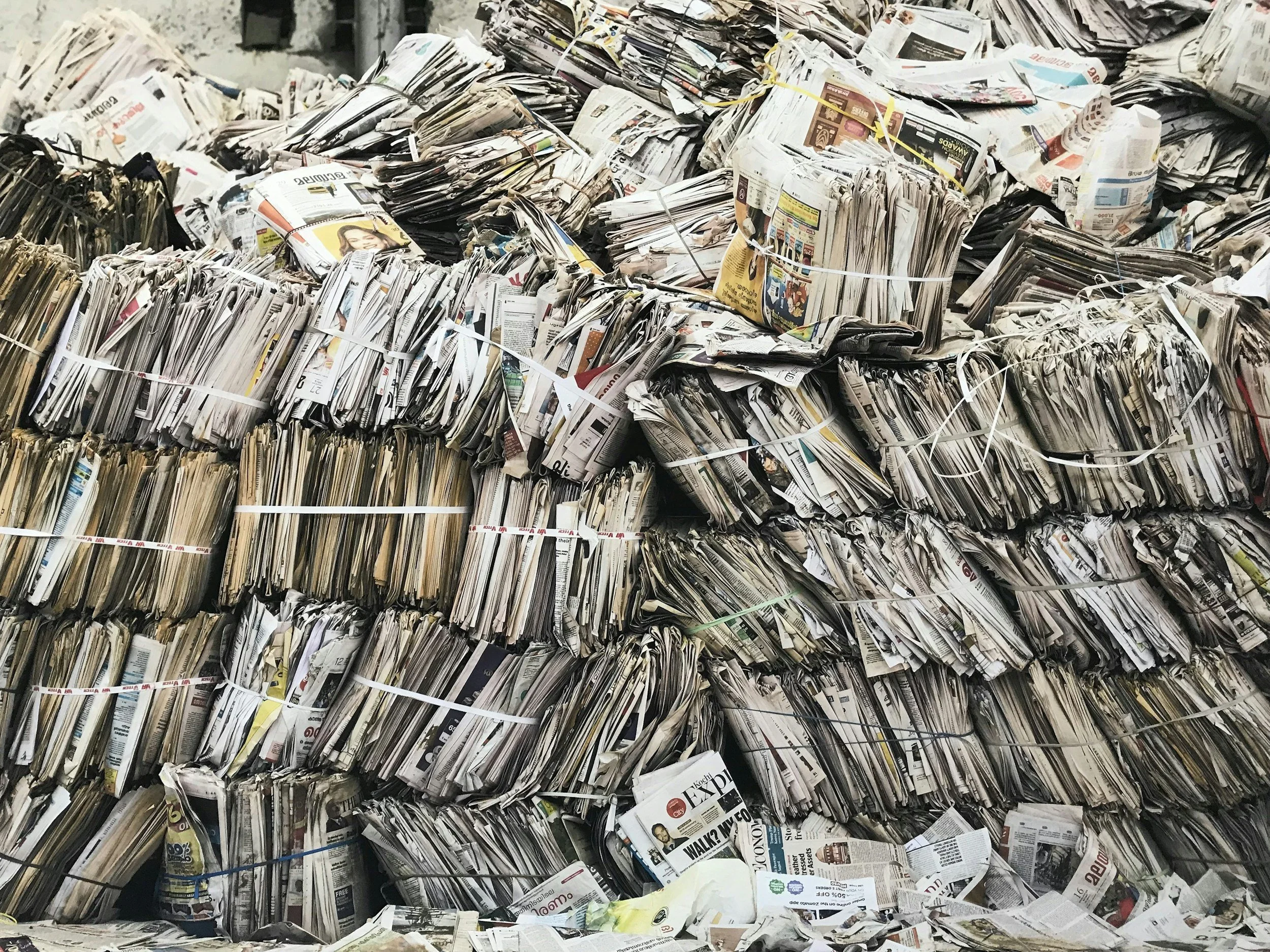
photo by Aditya
Despite all the mean things people said about him, Zell was a smart businessman with enough money to do the job. He had just added to his personal fortune more than $1 billion profit he made when he sold his commercial property real estate trust for $39 billion, perfectly staging the transaction at the peak of the real estate market when billion-dollar profits meant more than pocket change for the likes of Elon Musk.
Bezos has extraordinary financial skills, too. He started a book business that lost money and built it into an online marketing empire that revolutionized retail sales, changed the world, and made him a billionaire many times over.
Zell took the reins at Tribune Company in 2007 and promptly shook the media empire’s foundation to its core. Yet he failed miserably at reversing the company’s fortunes. A year after he seized control, the company filed for bankruptcy.
Bezos is also shaking up the Post, ordering cuts to operations not supported by reams of data to justify coverage, even though the paper’s journalistic performance is superb.
Although it’s not popular to raise this subject in journalistic circles, both Zell and Bezos had a point. For newspapers to be truly successful, both entrepreneurs argued, they must generate enough revenue to support their operations. Journalists usually don’t like to dirty their hands in the business side of journalism, but they should. They represent the most important voice at the table.
When Zell took over the Tribune Company, many journalists, including myself, welcomed him. The company’s newspapers made money, but they were dipping their toes into a sea of red ink, which would soon engulf them. We had tried to craft solutions to the problems, but our input was either ignored or rejected by the bean counter set. We all hoped Sam would have some better ideas. When Bezos came along and plopped down $250 million for the Post in 2013, according to numerous reports, the paper had suffered seven consecutive years of revenue declines. Bezos, like Zell, rode to the rescue.
In the intervening years, the Post’s revenues had ups and downs, but the paper never really emerged from a long-term slump that, with few exceptions, has plagued the entire newspaper industry. The Times and several other news outlets put the Post’s annual losses at about $100 million. So much for the guy with the white hat riding to the rescue.
Although Zell and Bezos’ solutions differed in detail, both men eventually adopted the same overall approach: cut staff, kill sections, end coverage of expensive news gathering, such as foreign reporting, an area where the Post had spent much money to make its mark.
Zell’s goals were as crude as he could sometimes be. He wanted the Tribune papers to make him a lot of money. “I am not a newspaper guy,” Zell once told journalists as he toured the company’s properties. “I am a businessman, and I know all that matters is the bottom line because if we have a bottom line, we have a newspaper.” Zell looked at the news business through the lens of real estate, a business he had mastered. I got fired as the editor of the Los Angeles Times for refusing to view the business the same way.
To his credit, Bezos said he bought the Washington Post as a civic responsibility to save the paper. He invested more in it during the early years of his tenure, and he has stayed out of the day-to-day operations of the newsroom until lately. Eventually, though, Bezos said he didn’t pay $250 million for the Post to create a charity to benefit journalists. The real path to success would come, he said, when the paper generated enough revenues to support itself. He’s right about that. In recent months, though, he’s demanded that the Post adopt some of the same practices that made him rich at Amazon: an emphasis on using data to guide decisions about where—and where not—to invest money.
Eventually, Bezos ended up where Zell did: His team recently fired nearly half of the staff, folded sections that the data didn’t support, such as the Sports and Books sections, which were killed, gutted the Metro section, and took a Musk-inspired chainsaw to the foreign staff, including coverage of the Middle East just as America went to war there. Bezos said that the recent cuts were needed to conserve the paper’s resources for important obligations, such as investigative reporting. But the message his tactic sends to the public is the same disastrous one that Sam Zell sent to the readers of the Tribune papers. And we all know how that worked out.
While ties between Bezos’s business interests and politics have made headlines, a deeper issue is involved. Both Zell and Bezos failed to grasp a key point: They acquired businesses where the public trust plays just as important a role as profit. When you run a public service business, you must take actions that maintain the public’s trust. Otherwise, you undermine the financial integrity of what makes news organizations essential.
I learned that the newspaper business is not a simple numbers game from readers when I was managing editor at the Chicago Tribune. The paper once ran an investigative report on some popular charities that took up an entire section of the Sunday newspaper, the day of the week when our circulation was at its highest. After the section ran, I began to wonder whether readers really read an entire section of the paper on a single subject, regardless of the quality of the story.
So, we did an experiment. We gathered a core group of readers and paid them to read the single section on the charities. We also reconfigured the section into a series of shorter stories covering the same subject, designed to run for five consecutive days. We then asked them to read both versions and answer two questions: Do you prefer a report on an important subject packaged professionally in a single section? Or would you rather have the shorter stories that would run consecutively in a series over five days? We then assembled the project's writers and editors to hear the readers' verdict. The results were fascinating and taught me the importance and the subtlety of public service journalism.
The investigative project employed the talents and efforts of some of the Tribune’s best writers, photographers, editors, and investigators. It was an expensive project that would eventually lead to positive changes in the regulation of the charities the report covered, although the reforms had not been enacted at the time of the experiment. The result? The readers we assembled didn’t think much of either approach, the headlines, the writing, or the pictures. Had they not been paid to read the content, most readers said, they would not have bothered with the stories, regardless of whether the content ran as a single large section or as five separate pieces. They were brutally honest about what we considered our best writing and editing. Then I asked: “Well, if you don’t read the stories regardless of our presentation and you don’t like what we did, should we stop doing this kind of journalism in your newspaper?”
Almost all said: “No.” One reader explained to me in words that went something like this: “Even if I don’t read it, it makes me feel good as a member of the public just to know that the newspaper is watching people like this and will write a story if something is wrong. You should keep doing these kinds of stories.”
That is a sentiment that no amount of Amazon data crunching or bottom lines will tell you. If people feel a newspaper or news organization serves the public, they are more likely to buy your newspaper, even if they don’t like the headlines, even if they don’t agree with your editorials, and, perhaps, even if you raise the price, or send it to them online.
Sam Zell, who passed away in 2023, had people at his disposal who understood that obligation, but he dismissed them. Instead, he installed someone to run the company who didn’t have a clue or care about the importance of public service. Readers abandoned the Tribune papers in droves. The Chicago Tribune’s average daily circulation fell from 566,827 when Zell took over in 2007, to 73,000 by 2023, the latest year that data was published by the Alliance for Audited Media, an industry circulation auditing service. The Tribune’s current owner, Alden Global Capital, a hedge fund that acquired it in 2021, played a role in the decline as well.
Readers are walking out on the Post, too, because of the cuts that Bezos presides over and because of changes in the paper’s editorial policy that erode its credibility as an independent voice that prioritizes the public’s interest. The Washington Post, for all its faults and virtues, is no Amazon, nor should it be. It is a public service institution that should be measured by yardsticks that go beyond algorithms or a bottom line. It is an important voice in Washington and the nation, particularly at a time when America is at war.
I understand that newspaper owners must make changes to shore up the publication’s finances. But they also should understand they are dealing with a business that differs from an office building or an online operation set up to sell people stuff. Newspapers thrived for decades on a business model that failed to keep up with the times. But they failed catastrophically when they took steps that sent their readers a message that they didn’t care about their mission of public service. Readers are not data points, and they shouldn’t be treated as such.
Years ago, I read some comments from the late Gardner (Mike) Cowles, a member of the Cowles family that owned numerous newspapers in the Midwest, including the Des Moines Register, where I once worked. His family prioritized profit but also never forgot the special nature of the business he loved.
“Two avenues of popularity are open to the newspaper,” Cowles once said, “The first is to yield to flatter, to cajole. The second is to stand for the right things, unflinchingly, and win respect. A strong and fearless newspaper will have readers, and a newspaper that has readers will have advertisements. That is the only newspaper formula worth working to. After making all allowances, the only newspaper popularity that counts in the long run is bottomed on public respect.”
–James O’Shea