
Midterm Pressures Constrain Trump’s Political Agenda
MAGA agenda threatened by Trump’s unpopularity with many voters as midterm elections loom on the horizon.
Just eleven months after Donald Trump’s historic return to the White House, his iron-clad base of support is showing strains catalyzed by voter angst over how he’s handling the issues that got him elected.
The starkest evidence of pressure on Trump’s political standing comes from polls conducted in December 2025 that tested his support. His approval rate of only 36 percent nearly matched his all-time low of 34 percent reached just after the violence at the Capitol on January 6, 2021 near the end of his first term.
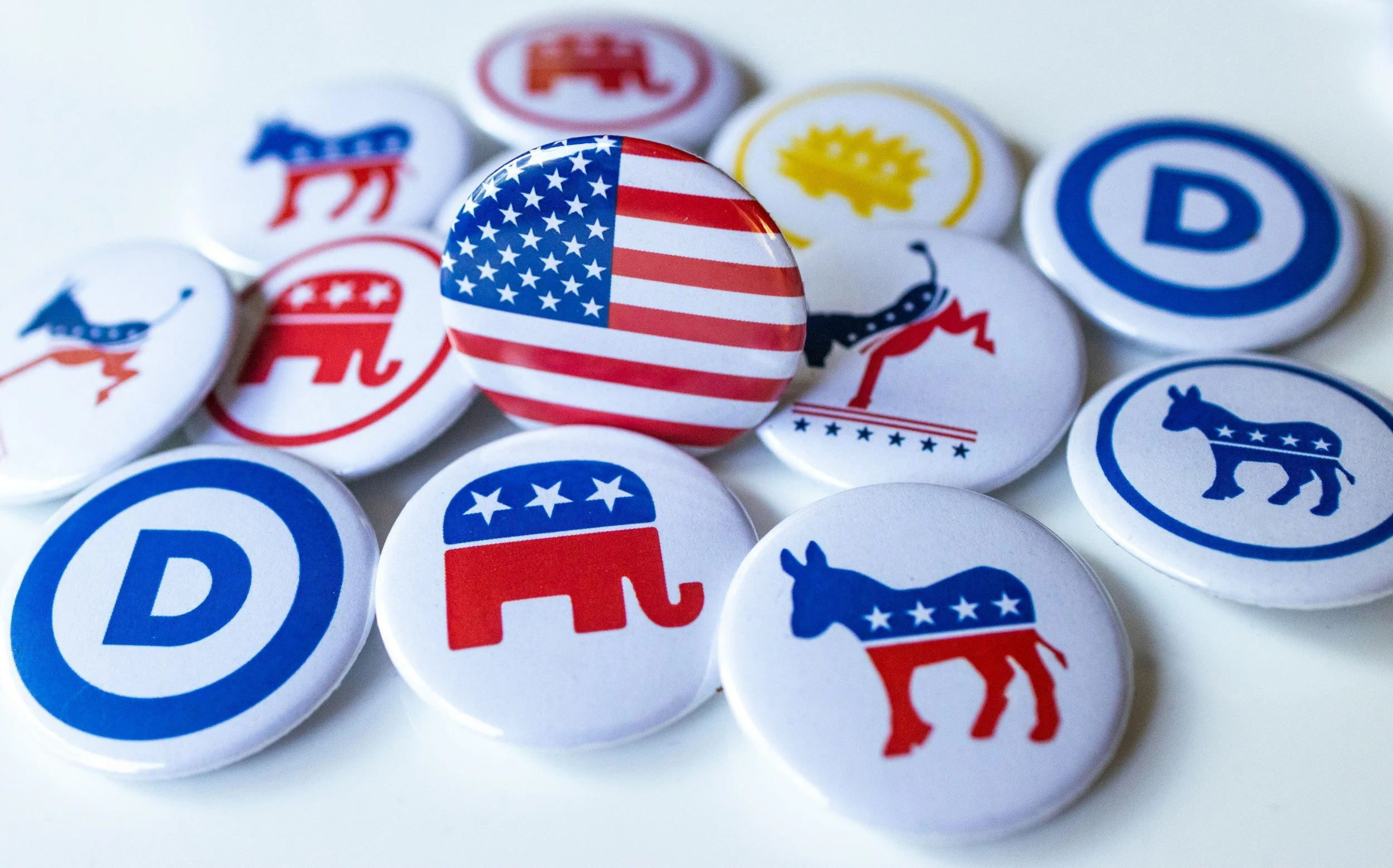
photo by Marek Studzinski
But the polls are not the only bad news for the president, whose party faces midterm elections that could dilute his power. In contrast to the early months of his presidency, Trump also faces a backlash in political circles populated by those who wouldn’t dare challenge him or his agenda just months ago.
Trump Devotee Lambasts President
The most flamboyant example of the pushback came from Representative Marjory Taylor Greene, once a stalwart devotee of the President Trump. She recently staged a blistering public break with Trump. Greene drew Trump’s ire for backing efforts to make public the files of Jeffrey Epstein, the disgraced and deceased sex offender whose case has become a cause cé·lè·bre for MAGA conservatives. Instead of standing down she struck back:
“Standing up for American women who were raped at 14 years -old, trafficked and used by rich, powerful men should not result in me being called a traitor and threatened by the president of the United States, whom I fought for,” Greene said after announcing that she would not seek re-election in the congressional midterms set for 2026. Though she did not elaborate on her future, but it’s a good bet she will not do so quietly.
A more consequential break came when the Indiana legislature delivered a stinging rebuke to Trump by rejecting a redistricting plan that he had pressured the lawmakers to pass before the regular deadline at the end of the decade.
Trump Rebuked by Red State Legislators
Indiana is a blood-red state located in the heart of America. Trump won 58.6 percent of the vote there in 2024. The state has two Republican senators, and the Grand Old Party (GOP) holds seven of the state’s nine congressional districts. Yet 21 Republicans joined 10 Democratic state senators to block a Trump-backed effort that would have eliminated, through a gerrymander, Indiana’s the state’s two Democratic-held House seats in Washington. Trump wanted to replace Democratic seats with handpicked GOP loyalists to improve his chances of holding on to Republican control of the House of Representatives in 2026. Governors in red states like Texas and Missouri had earlier heeded his calls for early redistricting.
Indiana State Senator Spencer Deerry attributed this state’s vote earlier in December to the need to protecting Indiana’s election integrity. But Trump’s sinking approval rating published on November 28 couldn’t not have escaped lawmakers their attention. Voters polled nationally disapproved of President Trump’s performance across a range of policies, including inflation and immigration, the two issues that he used rode on to win the last election.
The president is infamous for playing the blame game, especially when defending himself against economic problems. The public’s is not buying that argument, though. A full year into his own presidency, Trump continues to blame the problem on his predecessor, President Joe Biden. His argument that he inherited the problem of rising prices from Biden is partially true. The inflation rate did soar to just over nine percent early in Biden’s term.
Supply chain problems triggered by the Covid-19 pandemic created widespread shortages of products throughout the economy. In response, the government initiated an economic stimulus package that consisted of three checks sent to taxpayers to bolster their spending power and revive the economy. But the increase in spending power at a time of restricted supply created the classic inflation formula that sent prices sharply upward.
Trump Played Role in Biden Inflation
Trump initiated two of the three economic stimulus checks sent to almost all Americans before Biden beat him in the 2020 election. The newly elected Biden then sent a third check that added fuel to the inflationary fire.
Finally, the Federal Reserve Board, alarmed and led by Jerome Powell, jacked up interest rates numerous times over a short period to cool things off. Powell’s Fed pulled off an unprecedented “soft landing” by edging down the economy and inflation without causing a recession. By the end of Biden’s presidency, the inflation rate stood at 2.9 percent, about the same as it has been over the past year under Trump.
When pollsters focused solely on the question of how Trump has handled the economy, nearly 70 percent of those who respondents disapproved of Trump’s stewardship of a problem that he had claimed only he could solve. Voter discontent focused mainly on worries about inflation, but also due to another one of his policies: tariffs.
The President president argues that tariffs help America by imposing duties on imported goods, prompting consumers to buy products made in America, in line with his America First mantra. Once again, there’s some truth to the president’s logic. Tariffs do protect domestic businesses from foreign competitors. But Trump doesn’t tell the whole story.
Tariffs Inflated Prices, Too
Tariffs are sales taxes that raise prices on products people notice and feel in their pocketbooks. When Trump imposed tariffs on Chinese goods in 2018 and 2019, studies revealed that levies eventually were passed on almost entirely to consumers, converting a 25 percent tariff to a 25 percent price hike on clothing, shoes, household goods, furniture, and electronics, items consumers purchase frequently enough to notice the inflated price tag.
Food doesn’t escape tariffs, either. Even though Trump often carves out certain food products from his tariffs to please farmers, a key electoral bloc, the carve-outs don’t always apply to fertilizer, farm equipment, and other tools needed to produce crops. Such non-exempt farm inputs puts upward pressure on prices.
A surprising aspect of the December polling was voters’ skepticism about toward Trump’s approach to immigration. The President president had hammered Biden for his policies on America’s Southern border. Indeed, during in the early years of his White House term, Biden ignored problems on the Mexican/US border until it was too late.
Local officials struggled to contain a flood of immigrants to arriving in the US from across the world,. It creating created a crisis in states such as Texas, who which elevated the issue to national stature by busing immigrants to northern cities such as Washington and Chicago.
Chicago Cyclists Battle ICE by Buying Up Tacos
Voters continue to support the Ppresident’s firm US border policy, but the polls suggest they reject Trump’s heavy-handed approach to dealing with the problem.
In a recent survey by the Associated Press and the National Opinion Research Center at the University of Chicago, Trump’s immigration approach won approval of only 38 percent of American adults, down from 49 percent last March. Most respondents objected more to the administration’s tactics than to its policy. The data showed that law enforcement actions that resembled military deployments to Los Angeles, Washington, D.C., Chicago, and other cities coincided with – and probably contributed to – declining support for the administration on immigration.
In Chicago, residents objected to the presence of masked ICE (Immigration and Customs Enforcement) agents. The Trump administration dispatched the masked ICE teams to immigrant workplaces and homes during arrest and deportation sweeps. Neighbors and citizens demonstrated against theose sweeps. In one instance, an organized group of Chicago cyclists, calling themselves Cyclists & Solidarity, rode around the city early every morning, buying up all tamales and tacos from the city’s ubiquitous taco stands and street vendors. The cyclists’ goal: to buy all the tacos and tamales so the stands’ workers could go home safely and protect their families from ICE raids. The tacos were then donated to charitable organizations to help feed people experiencing poverty, a class that often includes many immigrants.
The anxiety about Trump’s inflation, tariffs, and immigration policies undoubtedly factored into recent Democratic election victories in several states, including a high-profile victory in New York City. The angst has given the political lexicon a new synonym for inflation: affordability.
Indeed, Zohran Mamdani, an unknown Democrat running as a democratic socialist, won the election as mayor of New York City, making affordability his key issue. But Trump dismisses “affordability” as a Democratic con job and hoax. In a recent nationally televised speech, he argued that the economy under his watch was “great.”
Fundamental Issue: Can Trump Stop the Slide?
The president’s political agenda is fraught with peril for Republicans running for re-election in the midterms just eleven months away. Affordability is a key issue, and Democrats are linking Trump loyalists to a party insensitive to the top-of-mind issues for voters. Poll respondents also viewed several of Trump’s foreign policies skeptically, including the ongoing naval attacks on boats from Venezuela that Trump authorized.
Globally, foreign leaders observe Trump’s political deterioration with a mixture of opportunism (China), anxiety (Europe), and strategic recalculation (Russia). Adversaries sense American distractions and inconsistencies. Global South nations see space for greater independence and breaking away from US dominance.
The fundamental question now facing Trump’s presidency is whether he can arrest the decline measured by the polls before the 2026 congressional elections. Historical precedents says show that the party in power typically loses House seats in the midterms, and Republicans hold only a slim majority.
With approval of Trump’s signature issues – the economy, immigration, tariffs – all underwater, and with foreign policy adventures like Venezuela threatening to become the “stupid foreign wars” he always lambasts, the Make America Great Again coalition that returned him to office faces its most serious test. If the GOP loses control of the House, Trump’s opponents, who have relied on news conferences and publicity stunts to oppose him over the past year, will have a far more powerful platform to challenge him and his policies.
Whether Trump can stabilize approval on his core issues before then will determine not only control of Congress, but the durability of the MAGA project itself.
–James O’Shea
James O’Shea is an award-winning American journalist and author. He is the past editor-in-chief of The Los Angeles Times, former managing editor of the Chicago Tribune, and chairman of the Middle East Broadcasting Networks. He is the author of three books, including The Deal from Hell, a compelling narrative about the collapse of the American newspaper industry. He holds a master’s degree in journalism from the University of Missouri.
Originally published in Eagle Intelligence Reports on December 29, 2025